Plate, Bowl, or Shared Dish: Three Ways to Shape a Meal
Plate, bowl, or shared dish: compare three meal-serving styles and choose one that fits your food, routine, and comfort at the table.
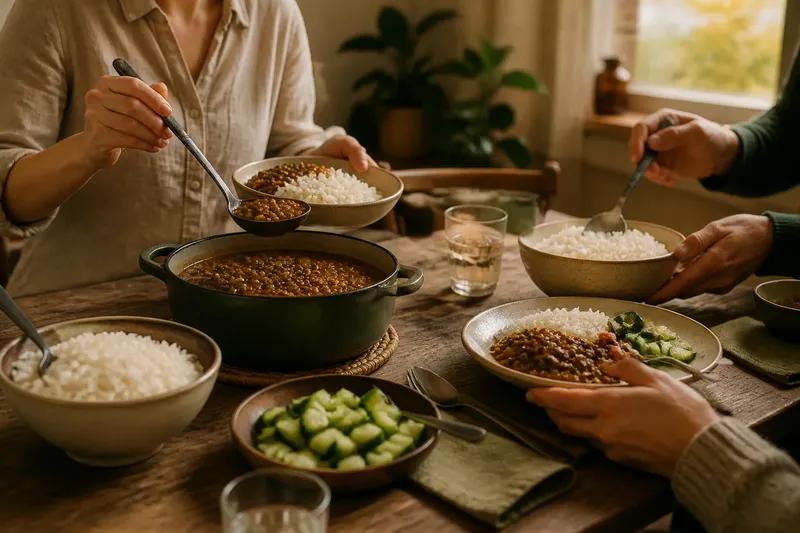
On a Tuesday evening, a pot of lentil stew sits beside cooked rice and chopped cucumber. One person wants dinner quickly, another prefers to choose each ingredient, and the cook would rather not assemble several customized meals. Plate, bowl, or shared dish can each suit the meal, depending on where serving decisions should happen.
Start with what dinner needs to do
Before choosing a plate, bowl, or serving platter, consider what would make this particular meal easier. The goal is not to make every dinner look alike. It is to get hot stew, rice, and cool cucumber to the table while leaving room for different preferences.
A plate is a broad surface where foods can remain distinct. A bowl has higher sides and can hold foods that mix or need spooning. With shared dishes, diners transfer food from communal serving vessels to their own plates or bowls. These forms can overlap: bowls can be assembled individually, and a shared platter can sit beside personal plates.
The amount of work matters, too. Serving each portion in the kitchen gives the cook control over the first presentation but takes time. Putting components out separately gives diners more choice, but calls for table space and serving utensils. Combining ingredients can reduce the number of dishes to carry, though some people may prefer to keep foods apart.
Choose the arrangement that solves the most immediate task, not the one that looks most orderly.
Individual plating makes the first decision in the kitchen
To serve dinner individually, bring plates to the counter and add rice, stew, and cucumber to each one. The food is ready to eat when it reaches the table. No one has to pass a hot pot, find a spoon, or assemble a meal while hungry.
This approach can be convenient when a meal has several components that are easy to arrange separately. A plate gives each item its own visible place. It can also suit a household that wants a quick handoff, or a meal where passing cookware would be awkward.
The tradeoff is that the cook makes the initial choices for everyone. Another person might want more cucumber, less rice, or stew kept separate. Leaving a serving dish on the table for additions is one option, though it brings some of the shared-dish approach back into the meal.
Individual plating is not automatically more controlled or more suitable for weight loss. It is simply a way to move serving decisions to the kitchen. A plated meal can be generous, modest, varied, or simple; the arrangement alone does not define what is on it.
Bowl-style serving keeps flexible foods together
With bowls, spoon rice into each one and add stew, then offer cucumber separately. The higher sides make a soft, mixed meal easier to carry and eat with a spoon. Ladling stew over rice lets the flavors combine rather than spill across a plate.
A bowl works well when ingredients are meant to mingle, such as soup with grains, beans with roasted vegetables, or noodles with sauce. It can be convenient on a couch or at a small table, where a wide plate may be harder to balance. A bowl can also hold components in separate areas for someone who prefers not to mix them.
Bowls do not have to be assembled in the kitchen. Set out the rice and stew for people to serve themselves, or prepare each bowl at the counter. The first option gives diners more say and leaves more dishes on the table. The second makes serving faster at the table but assumes the cook knows what each person wants.
If diners are unsure about mixed ingredients, ask whether they want stew poured over rice or kept in a serving pot. A quick preference check is more useful than guessing from the shape of the dish.
Shared dishes move choice to the table
Set the rice, stew, and cucumber in separate serving dishes, then let each person serve themselves. Diners can choose what to take, return to a dish if they want another helping, and keep ingredients apart or combine them.
Shared serving works well when people enjoy passing food and the table has room. It can reduce the need to assemble separate meals, and it gives diners control over their combinations. For a casual dinner, that flexibility may feel more welcoming than a row of identical plates.
This arrangement also calls for practical cooperation. Someone has to pass the rice, serving spoons need to be available, and a hot pot may be awkward to move. If people arrive at different times, food may sit out while someone waits. Keep the stew in its cooking pot nearby and bring out only the components that are easy to serve, rather than making every dish communal.
Shared dishes are not a cue to eat more or less. They change where decisions happen and who makes them. Comfort, appetite, and household customs still vary.
How do plate, bowl, and shared-dish setups compare?
Which option needs the least assembly?
Individual plating can finish the meal before it reaches the table, while shared dishes leave final serving to diners. A bowl can be quick if the ingredients can be spooned together, but preparing each bowl still takes assembly.
What if diners want different combinations?
Separate shared dishes make it easier for each person to combine foods or keep them apart. Another option is to serve a basic bowl and leave cucumber and extra stew on the table.
Does a serving style set a portion rule?
No. A plate, bowl, or shared dish is a way to arrange and serve food, not a universal guide to how much someone should eat. Preferred amounts and meals vary.
What if the table is crowded or someone arrives late?
Individually served plates or bowls may be easier to carry and set down when space is limited. If people eat at different times, keep the main food in its pot and serve each person when they arrive, following ordinary food-safety guidance for storage and serving.
Use the meal’s needs to choose a serving style
For the stew, rice, and cucumber, imagine the cook sets out rice and cucumber in serving bowls, then ladles stew into one personal bowl and leaves the pot nearby. The first person can start eating right away; the next can make a different combination. The cook avoids assembling several customized servings, while the diners retain some choice. That setup addresses the stated needs without treating it as a rule for every meal.
For another dinner, plate the food in the kitchen if a quick handoff matters more. Put components on the table if diners want more control over combinations. Choose bowls when the food is soupy or easy to mix. The menu, available space, and people at the table can all change the best fit.
When choosing between a plate, bowl, or shared dish, ask who should make the serving decisions and where. That answer can settle the arrangement more clearly than searching for one correct way to serve dinner. A mixed setup is also an option when convenience and choice both matter.